

Cart
0

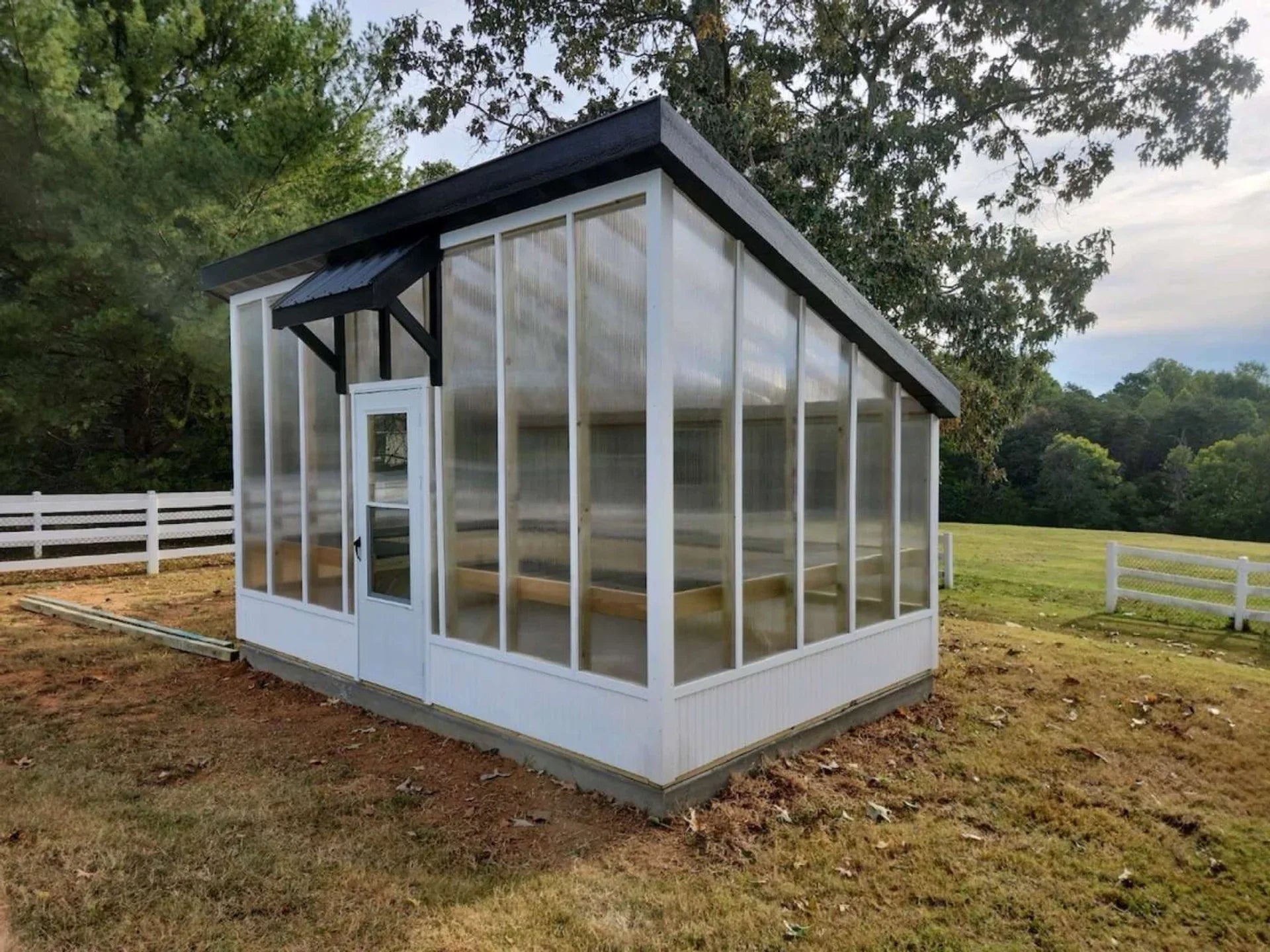
Short answer: almost every greenhouse needs a base that is level, square and well drained. Small kits can sit on a timber frame or pavers. Larger and glass greenhouses usually need a concrete pad or a block foundation. Whether you need a permit depends on your town, so call your local building department before you order. Most of the problems people have with a greenhouse start with the base.
Why the Base Matters So Much
A greenhouse frame is built to tight tolerances. If the base is out of level or out of square, doors stop closing properly, panels won't seat and roof vents can bind. A good base also keeps wood away from wet ground, stops the structure from shifting in wind and frost, and helps the greenhouse last for decades.
Common Greenhouse Foundation Options
| Base | Best for | Things to know |
|---|---|---|
| Timber frame | Small and mid-size kits | Use ground-contact rated lumber, set it level and square, and anchor it to the ground. |
| Pavers or patio slabs | Small kits, garden-bed greenhouses | Lay them on a compacted gravel bed so they don't settle unevenly. |
| Compacted crushed stone | Prebuilt greenhouses, sheds and playhouses | Drains well and is the most common pad for buildings delivered fully built. Edge it with timber to hold the stone in place. |
| Concrete pad | Large kits, glass greenhouses, garden rooms | The most stable and the easiest to keep clean. Plan for drainage inside if you'll be watering a lot. |
| Block or brick knee wall | Glass greenhouses, orangeries | Raises the greenhouse, adds a classic look and keeps glass away from soil and splashing. Follow the manufacturer's foundation plan exactly. |
Always check the foundation drawing for your specific model. Glass greenhouses in particular come with exact foundation dimensions, and the frame has to match them.
Kits vs. Prebuilts: What to Prepare
For a greenhouse kit
- Build the base to the exact outside dimensions on the manufacturer's plan.
- Check that it's level in every direction, and measure both diagonals. They should match, which tells you the base is square. You can also use the 3-4-5 method: mark 3 feet along one side and 4 feet along the other, and the corner is square when the diagonal between the marks is exactly 5 feet.
- Plan how you'll anchor the frame. Many kits include anchors or have an optional anchor kit.
- For a crushed stone base, strip the grass and roots, dig out about 4 inches, lay landscape fabric and fill with compacted crushed stone.
- Call 811 a few days before you dig so underground utility lines can be marked.
For a prebuilt greenhouse, shed or playhouse
- Prepare a level, well-drained pad, usually compacted crushed stone or concrete, a little larger than the building.
- Make sure the delivery truck can get close. Check gate widths, overhead wires, tree branches, slopes and soft ground.
- Have the site ready before delivery day. The building is set directly on your prepared pad.
Not sure your site works for a delivered building? Text us a few photos of the spot and the path to it at 732-806-7959 and we'll take a look.
Where to Put Your Greenhouse
- Sun: pick the spot with the most winter sun. In most of the U.S., an east-west long axis catches the most light.
- Drainage: avoid low spots where water collects.
- Wind: a fence, building or hedge on the windward side helps, but keep it far enough away that it doesn't shade the greenhouse.
- Access: closer to the house means easier watering and an easier run for water or electric.
- Setbacks: many towns require structures to sit a minimum distance from property lines.
Do You Need a Permit for a Greenhouse?
It depends on where you live. Some towns don't require a permit for a small backyard greenhouse, while others treat any accessory structure like a shed. Things that often affect the answer:
- The size of the greenhouse, both its footprint and its height
- Whether it has a permanent concrete foundation
- Whether you're adding electric, water or gas
- Setbacks from property lines and other buildings
- HOA rules, if you have an HOA
Call or visit your local building or zoning department before you order and ask what they need. Most will tell you over the phone. If they ask for product drawings or specifications, we can send them to you.
Electric and Water
Running power for a heater, fan or lights, or a water line for irrigation, is usually done by a licensed local electrician or plumber, and may need its own permit. If you plan to add them, it's easiest to run conduit and lines before you pour concrete or set the base.
FAQ
Can I put a greenhouse directly on the ground?
Small portable greenhouses can sit on the ground with stakes. Anything larger needs a level base so the frame stays square and doors and panels fit properly.
What is the best foundation for a greenhouse?
For most permanent greenhouses, a concrete pad or a block foundation is the most stable. For many kits and prebuilt buildings, a well-compacted, level crushed stone pad works well and drains easily.
Do I need a permit for a greenhouse?
Requirements vary by town and depend on size, foundation and utilities. Check with your local building department before you order.
How do I prepare for a prebuilt greenhouse delivery?
Have a level, well-drained pad ready and make sure the delivery truck has clear access to the site. We'll go over the details with you before delivery.
Do greenhouses need to be anchored?
Yes. Anchoring keeps the structure from moving in high wind. Follow the manufacturer's anchoring instructions for your model.
Planning your site? Call or text us at 732-806-7959 with a photo of your yard. We're happy to help you plan the right spot and base for your greenhouse.

