

Cart
0
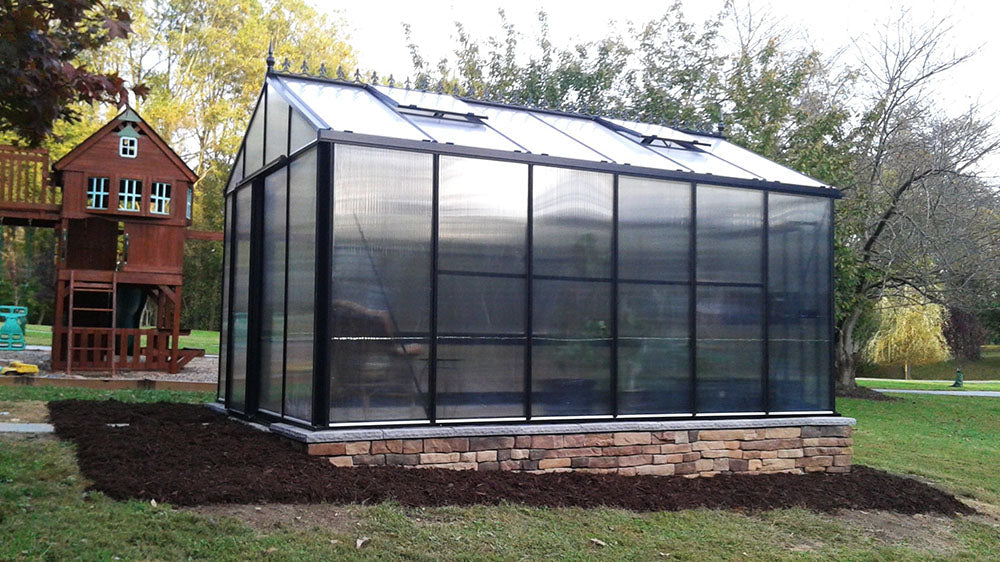
It's the first question almost every greenhouse buyer asks us: should I get glass or polycarbonate? Both are great choices, and the right one depends on your climate, what you'll grow, how the greenhouse will look in your yard and your budget. Here's how they compare, from a family business that has been helping customers choose greenhouses for over 10 years.
Short answer: Choose glass if you want the clearest view, a classic look that won't yellow, and a greenhouse that doubles as a garden room. Choose polycarbonate if you want better insulation for winter growing, more protection from hail, softer diffused light and a lower price. If you want both, a hybrid greenhouse uses glass walls with a polycarbonate roof.
Glass vs. Polycarbonate at a Glance
| Glass | Polycarbonate | |
|---|---|---|
| Light | Crystal-clear, direct light | Clear or diffused (twin-wall spreads light evenly and reduces leaf scorch) |
| View and look | See-through, elegant, classic | Twin-wall is frosted-looking; clear panels are see-through |
| Insulation | Lower (single pane), except double-glazed models | Higher; twin-wall and triple-wall trap an insulating layer of air |
| Hail and impact | Tempered safety glass is strong, but a direct hit can break a pane | Very impact-resistant |
| Aging | Doesn't yellow or haze | UV-protected panels last many years but can slowly dull over time |
| Weight and foundation | Heavier; needs a solid, level base | Lighter; still needs a level, anchored base |
| Price | Higher | Lower for the same size |
When to Choose a Glass Greenhouse
Glass is the choice when the greenhouse is a feature of your garden, not just a place to grow. It gives you the clearest view in and out, it never yellows, and with the right frame it can be a beautiful sitting room among your plants.
- You want a showpiece or garden room. A Victorian-style glass greenhouse is as much about the look as the growing.
- You grow sun-loving plants like tomatoes, peppers, citrus and succulents that thrive in direct light (shading handles the hottest months).
- You want it to look the same in 20 years. Glass keeps its clarity.
What to look for: tempered safety glass (Janssens uses 4mm, where many brands use 3mm), a heavy aluminum frame, rubber glazing seals and stainless hardware. Our most popular glass greenhouse is the Janssens Royal Victorian, from $9,799 in four sizes. See all glass greenhouses or Victorian-style glass greenhouses.
When to Choose a Polycarbonate Greenhouse
Polycarbonate is the practical choice for serious growing, especially through cold winters or where hail is common.
- You want to grow through the winter. Twin-wall and triple-wall panels hold heat far better than a single pane of glass, which means lower heating costs.
- You get hail, falling branches or kids playing nearby. Polycarbonate is very hard to break.
- You start seeds or grow leafy greens. Diffused light reaches the whole plant evenly and reduces scorching.
- You're watching your budget. You get more space for the money.
What to look for: UV-protected panels, a sturdy aluminum frame (not PVC) and good roof ventilation. Thicker panels insulate better. Options we carry:
- Riga by Hoklartherm: German-engineered, with a curved shape that sheds snow and wind, from $5,399. The Riga XL uses 16mm triple-wall panels for schools and serious growers.
- Grandio Elite: a barn-style greenhouse with 10mm twin-wall panels, one of the most insulated in its class, from $2,599.
- Canopia by Palram: affordable starter greenhouses such as the Hybrid Series, with clear walls and a UV-blocking twin-wall roof, from $540.
See all polycarbonate greenhouses.
The Best of Both: Hybrid Greenhouses
Can't decide? A hybrid gives you glass walls for the view and a polycarbonate roof for insulation and hail protection. The Janssens Royal Victorian Hybrid has the classic Victorian look with a 10mm polycarbonate roof, from $14,999. It's our top pick for cold climates and hail-prone areas where customers still want a glass greenhouse.
For year-round comfort as a true garden room, the Janssens LIVINGTEN uses double-paned 22mm glass with a thermally broken frame.
What About Wood?
Wooden greenhouses pair a cedar frame with glazing, giving a warm, natural look that blends into the garden. Cedar naturally resists rot and insects. See our wooden greenhouses and Alton cedar greenhouses.
Quick Guide by Situation
- Cold winters, want to grow year-round: twin- or triple-wall polycarbonate, or a hybrid.
- Hail country: polycarbonate, or a hybrid with a polycarbonate roof.
- Showpiece, garden room or entertaining: glass.
- Hot, sunny climate: either works with good ventilation and shading; polycarbonate diffuses light, glass needs shade in summer.
- Schools and community gardens: polycarbonate for durability and safety around students.
- Tight budget: polycarbonate.
Still deciding? We'll help you choose.
Tell us your climate, what you want to grow and where the greenhouse will go, and we'll recommend the right model, foundation and accessories. Call or text 732-806-7959.
FAQ
Is glass or polycarbonate better for a greenhouse?
Neither is better for everyone. Glass gives the clearest view and lasts without yellowing; polycarbonate insulates better, resists hail and costs less. Your climate and how you'll use the greenhouse decide it.
Does a polycarbonate greenhouse stay warmer in winter?
Yes. Twin-wall and triple-wall polycarbonate trap air between layers, so they hold heat much better than a single pane of glass. Thicker panels insulate more.
Will a glass greenhouse break in hail?
Tempered safety glass is strong and, if it does break, it crumbles into small pieces rather than sharp shards. In areas with frequent large hail, a polycarbonate roof or a hybrid greenhouse is the safer choice.
Does polycarbonate turn yellow?
Quality panels are UV-protected and last many years, but they can slowly dull over a long period. Glass doesn't yellow.
Which is better for plants, clear or diffused light?
Diffused light (twin-wall polycarbonate) spreads evenly and reduces scorching, which suits seedlings and leafy crops. Clear light (glass) suits sun lovers, with shading in peak summer.
Do I need a permit for a greenhouse?
Not always. It depends on your town, your HOA and the size of the structure. We can provide documents, including engineered drawings for many models, if your town asks for them.
Questions? Call or text us at 732-806-7959. Texting is the fastest way to reach us.